Thursday, 6 October 2011

Five: Hypothesis on Immunisation

Originally proposed question:
Through immunisation programs in Australia and worldwide is there enough scientific evidence to justify that vaccination programs reduce infant mortality rates significantly,how are these programs implemented.


Newer modified question:
The benifits of complusory vaccination programs outweigh the risks.


Four: Proposed Research Strategy

                                    Research Strategy


Searching Bibliographic Sources
  • World Book (Online)
  • Gale Encyclopedia of Children's Health: Infancy through Adolescence (Online) 
  • Wikipedia  Free Encyclopedia (Online) 
  • Periodical databases (Online)
  • Government (Online publications and resources) 
  • Books on the subject
Why These Sources Were Chosen
  • They are useful to gain authoritative and correct knowledge on the topic.
  • Easy access.
  • Information sources aimed at a mid - high adult range level.    
Source Locations
  • TAFE N.S.W catalogue/ study links / eResources. 
  •  Public libraries catalogues and eResources.
  • State Library of N.S.W online databases.
  • Government health related websites and eResources.
Search Terms Used
 Some suitable LCSH search terms
  • Immunization AND Vaccinations
  • Immunisation Vaccinations AND Epidemics
  • Benifits AND Vaccinations
  • Risks AND Vaccinations
Related Thesaurus Terms
Terms for Immunisation 
  • Immunization - Vaccination - Disease
 Terms for Homoeopathic or Homoeopathy
  • Not found
Terms for Natural
  • Innate
And some other related terms found

Mode of Searches
  •  Identifying  the search terms as noted and other related terms on Immunisation that come available during the complex research project 
  •  Including the use of search engines such as "Google" to expand the search area for information on project topic.
  • The use of online periodicals databases and library catalogues and other study links as well..
Directing  the search towards benifits of complusory vaccination rates in general that links to records specifically on rates of decline in childhood illnesses and any reemergence's of childhood diseases and how vaccination programs outweighs the risks.


I

Thursday, 29 September 2011

Three: Concept Map

  Immunisation


Tuesday, 27 September 2011

Two:Immunisation: Immune System and Vaccines.

                                          Immunisation
Immunisation against disease is a natural process as the human immune system adapts biologically to protect hosts against infections but has  limitations in its defence against deadly viruses and infections.


Immunisation vaccines are developed by medical science in strictly regulated methods through the manufacturing process of creating vaccines against disease.
                               Human Immune System (Biological)

 Knowing  how the immune system or biological aspect works in the human body is how medical science created vaccines.The immune system is a system of biological structures and processes within an organism that protects against disease by identifying and killing pathogens and tumor cells. Protection is built up through the immune system in two ways, it creates natural/native and adaptive immunisation against disease by breaking into two arms:


Viruses and other foreign substances can evolve rapidly, and adapt to avoid the immune system and allows them to successfully infect their hosts.
Innate immunity is the first line of defense against infections. Innate immunity is specifically against microbes, while adaptive immunity is against any "foreign" substance (including cancer cells, auto antigens, etc.).
Innate immunity is the oldest mechanism of defence.


The human immune system adapts over time to recognize viruses and specific foreign substances more efficiently. This adaptation process is referred to as "adaptive immunity" or "acquired immunity" and creates immunological memory.
Adaptive immunity (T and B lymphocytes) is superimposed on innate immunity to improve host defence. In a sense, adaptive immunity is an "add-on" to innate immunity. 
1:INNATE
Innate immunity (natural or native immunity)
Instant
Immediate
Initial response
Induces adaptive immunity
Integrates with adaptive immunity


2:ADAPTIVE
Adaptive immune system
Acquired
Await days = no immediate response
Accurate = specific
Auto regulation
Autoimmunity


Immunological memory, created from a innate response to a specific virus or foreign substance, provides an enhanced response to secondary encounters with that same, infection. 


This process of acquired immunity this is where vaccinations are useful, the innate response can take 2 days and up to 2 weeks to develop. After the body gains immunity towards a certain virus or foreign substance, when infection by that virus occurs again, the immune response is called the secondary response.     
                        Immunisation Vaccines (How does it work)

HOW IMMUNIZATIONS WORK
Immunizations teach your body how to defend itself when germs such as viruses or bacteria invade it.
  • They expose you to a very small, very safe amount of a virus or bacteria that has been weakened or killed.
  • Your immune system then learns to recognize and attack the infection if you are exposed to it later in life.
  • As a result, you will either not become ill or have a milder infection. This is a natural way to deal with infectious diseases.
Four different types of vaccines are currently available:
  • LIVE VIRUS VACCINES use the weakened (or attenuated) form of the virus. The measles, mumps, and rubella (MMR) vaccine and the varicella (chickenpox) vaccine are examples of this type.
  • KILLED (Inactivated) VACCINES are made from a protein or other small pieces taken from a virus or bacteria. Influenza shots are an example of this type of vaccine.
  • TOXOID VACCINES contain a toxin or chemical made by the bacteria or virus. They make you immune to the harmful effects of the infection, instead of to the infection itself. Examples are the diphtheria and tetanus vaccines.
  • BIOSYNTHETIC VACCINES contain human-made substances are very similar to pieces of the virus or bacteria. The Hib (Haemophilus influenzae type B) conjugate vaccine is one example.
                                     The Manufacturing Process 
Manufacturing an anti-virus vaccine today is a complicated process created with in the sterile laboratory environment.
There are SEVEN Steps taken in producing immunisation vaccines

Vaccine

1: Manufacturing begins  the Seed    Small amounts of a specific virus (or seed). 

The virus must be free of impurities, including other similar viruses and even variations of the same type of virus. The seed must be kept under "ideal" conditions, usually frozen, that prevent the virus from becoming either stronger or weaker than desired. Stored in small glass or plastic containers, amounts as small as only 5 or 10 cubic centimeters, but containing thousands if not millions of viruses, will eventually lead to several hundred liters of vaccine. Freezers are maintained at specified temperatures; charts and/or dials outside of the freezer keep a continuous record of the temperature. Sensors will set off audible alarm signals and/or computer alarms if the freezer temperature goes out of range.

2:  Growing the virus (  After defrosting and warming).

Warming the seed virus under carefully specified conditions (i.e., at room temperature or in a water bath), the small amount of virus cells is placed into a "cell factory," a small machine that, with the addition of an appropriate medium, allows the virus cells to multiply. Each type of virus grows best in a medium specific to it, established in pre-manufacturing laboratory procedures, but all contain proteins from mammals in one form or another, such as purified protein from cow blood. The medium also contains other proteins and organic compounds that encourage the reproduction of the virus cells. As far as the virus is concerned, the medium in a cell factory is a host for reproduction. Mixed with the appropriate medium, at appropriate temperature, and with a predetermined amount of time, viruses will multiply

3:  Other Factors

 In addition to temperature, other factors must be monitored, including the pH of the mixture. pH is a measure of acidity or basicity, measured on a scale from 0 to 14, and the viruses must be kept at a defined pH within the cell factory. Plain water, which is neither acidic or basic (neutral) has a pH of 7. Although the container in which the cells are growing is not very large (perhaps the size of a 4-8 quart pot), there are an impressive number of valves, tubes, and sensors connected to it. Sensors monitor pH and temperature, and there are various connections for adding media or chemicals such as oxygen to maintain the pH, places to withdraw samples for microscopic analysis, and sterile arrangements for adding the components of the cell factory and withdrawing the intermediate product when it is ready.

Vaccine


4: Begin Virus Separation from the Medium 

The virus from the cell factory is then separated from the medium, and placed in a second medium for additional growth. Early methods of 40 or 50 years ago used a bottle to hold the mixture, and the resulting growth was a single layer of viruses floating on the medium. It was soon discovered that if the bottle was turned while the viruses were growing, even more virus could be produced because a layer of virus grew on all inside surfaces of the bottle. An important discovery in the 1940s was that cell growth is greatly stimulated by the addition of enzymes to a medium, the most commonly used of which is trypsin. An enzyme is a protein that also functions as a catalyst in the feeding and growth of cells.In current practice, bottles are not used at all. The growing virus is kept in a container larger than but similar to the cell factory, and mixed with "beads," near microscopic particles to which the viruses can attach themselves. The use of the beads provides the virus with a much greater area to attach themselves to, and consequently, a much greater growth of virus. As in the cell factory, temperature and pH are strictly controlled. Time spent in growing virus varies according to the type of virus being produced, and is, in each case, a closely guarded secret of the manufacturer.

5: Separation

 When there is a sufficient number of viruses, they are separated from the beads in one or more ways. The broth might be forced through a filter with openings large enough to allow the viruses to pass through, but small enough to prevent the beads from passing. The mixture might be centrifuged several times to separate the virus from the beads in a container from which they can then be drawn off. Still another alternative might be to flood the bead mixture with another medium which washes the virus off the beads.

and selecting the strain

The eventual vaccine will be either made of attenuated (weakened) virus, or a killed virus. The choice of one or the other depends on a number of factors including the efficacy of the resulting vaccine, and its secondary effects. Ru vaccine, which is developed almost every year in response to new variants of the causative virus, is always an attenuated vaccine. The virulence of a virus can dictate the choice; rabies vaccine, for example, is always a killed vaccine.

6:  If the vaccine is attenuated (Weakened)

The virus is usually attenuated ( to make less complex or to weaken) before it goes through the production process. Carefully selected strains are cultured (grown) repeatedly in various media. There are strains of viruses that actually become stronger as they grow. These strains are clearly unusable for an attenuated vaccine. Other strains become too weak as they are cultured repeatedly, and these too are unacceptable for vaccine use. Only some viruses are "just right," reaching a level of attenuation that makes them acceptable for vaccine use, and not changing in strength. Recent molecular technology has made possible the attenuation of live virus by molecular manipulation, but this method is still rare.

7: Virus is then Separated from the Medium

 The virus is then separated from the medium in which it has been grown. Vaccines which are of several types (as most are) are combined before packaging. The actual amount of vaccine given to a patient will be relatively small compared with the medium in which it is given. Decisions about whether to use water, alcohol, or some other solution for an injectable vaccine, for example, are made after repeated tests for safety, sterility, and stability.

Quality Control

To protect both the purity of the vaccine and the safety of the workers who make and package the vaccine, conditions of laboratory cleanliness are observed throughout the procedure. All transfers of virus and media are conducted under sterile conditions, and all instruments used are sterilized in an autoclave (a machine that kills organisms by heat, and which may be as small as a jewel box or as large as an elevator) before and after use. Workers performing the procedures wear protective clothing which includes disposable tyvek gowns, gloves, booties, hair nets, and face masks. The manufacturing rooms themselves are specially air conditioned so that there is a minimal number of particles in the air.

The Approval Process


In order for immunisation vaccines to be distributed  a drug manufacturer must meet strict licensing requirements established by law.All prescription drugs must undergo THREE phases of testing, although data from the second phase can sometimes be used to meet third phase requirements.
Phase 1 testing must prove that a medicine is safe. If a medicine passes will go onto phase II.
Phase II testing, it must next be tested for efficacy—it must do what it is supposed to do; vaccines cannot be distributed unless it does exactly what it advertises.
Phase III testing is designed to quantify the effectiveness of the vaccine.Immunisation vaccines are expected to have effectiveness close to 100%.
The entire manufacturing process is reviewed carefully by the examination of  records involving procedures as well as government representatives visiting the manufacturing site itself.
Each step in the manufacturing process must be documented, and the manufacturer must demonstrate a "state of control" for the manufacturing process.
This means that  records must be kept for every step in the process, and there must be written instructions for each step of the process.


Vaccine Manufacturing Environment


Final Vaccine Produced


Finally Ready to Inject


One:Immunisation FOR and AGAINST viewpoints


                                        Overview of Notes
There has long been an debate about immunisation and why it is needed. Differing points of views challenge each other:
                                     Medical Health Practises Versus Parental Concerns.
                                                    FOR
                                             Medical Science


                    History Behind Immunisation Vaccinations
                                       (Deaths in Decline)
The first idea for creating a substance to immunise humans against disease began  as far  back as the 1700's.   Historically,some type of recording or listing  for disease outbreaks and deaths were written .But only within the turn of the 20th and 21st centuries have detailed death rate records have been kept.
Pre WW11 studies and experimentation against diseases developed and the first real immunisation vaccines against diseases were produced  then given to soldiers heading out to war to protect them against a variety of diseases.

Some deadly  diseases which had resulted in high mortality rates at the time:

Measles
Diphtheria
Tuberculosis
Yellow fever
Polio
Pertussis
Tenuous.

Ever since data on immunisation vaccination coverage has been gathered since through the years with impressive statistical information for its success has been taken from analysed data/graphs showing disease outbreaks in decline thus boosting the belief of immunisation vaccinations effectiveness.
Medical science continues to develop and seek to create new and stronger vaccines against any resistant strains of current diseases.Medical science continues to be ready to study  unknown  but new deadly diseases threatening mankind by creating immunisation vaccines to protect human population worldwide.


                    A child being immunised against disease such as polio 
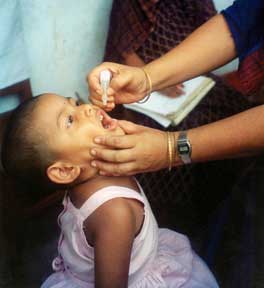

                                            File:Poliodrops.jpg


In industrialised nations  like Australia have statistical records from as far back as 1956 showing pre immunisation vaccinations and  rate of deaths for Diphtheria,Pertussis,Tuberculous,Polio and Measles and comparing declining death rates of these diseases with introduced annual immunisation  vaccinations up to 2003.

                                                   Australian  Death Rate in Decline

Man Made Immunity 
(Programed Immunisation Vaccinations)

Vaccines are a useful to improve and protect against infections through trials with industrialised nations use of annual vaccinations aged from new born's to toddlers following forward to teenagers then could includes adult inoculations.
Developing nations lag behind in annual immunisation vaccinations but now some African nations and other counties from Asian and Sub Asian continents including some South American regions, now seek to improve infant mortality rates.
The United Nations Children's Fund recently reported that 12 million children under the age of 5 die each year in the world.  Many of these deaths could be prevented by adequate vaccination programs for infectious diseases.
These countries are often lack financial support and with the help from world health organisations distributing vaccinations donated by large overseas pharmaceutical organizations, high to local government medical health research studies or international  medical experimental university studies.
New vaccine trials can then be introduced through these scientific institutions and corporations.
Through such trials testing new drugs and monitoring any side effects or deaths seek to improve vaccinations potency against any recurring diseases or new infectious viruses from spreading worldwide.
Medical science has a view only through vaccinations can humans develop stronger immunity towards infectious diseases that just relying on natural immunity alone.

                            Vaccine Programs in Developing Countries


                                              AGAINST
                               Parental Concerns
Over the years misunderstanding or unfounded allegations regarding the side effects of immunisation has spread. Ideas such as immunisation leads to the increase of Auto immune diseases such as Autism, Multiple Sclerosis and Sudden Death Syndrome or Epileptic type seizures .

Fear is highlighted with outbreaks of infectious disease such as new viruses Bird flu and Swine flu.


Some parents who have doubts about immunisation may feel they are under pressure from their GP or health visitor to have their child vaccinated.


Parents are fearful of side effects thinking the vaccines contain harmful contaminates lowering natural immunity.


                                 Natural Immunity
This is where parents follow a natural selection path against diseases children are often exposed to.
Very young babies have some natural immunity passed to them by their mother when in the womb, but this only lasts a short time.
Your child has natural immunity for 2 or 3 months for:
  •   Diphtheria
  •   Tetanus
  •   Whooping cough
  •   Polio
  •   The hib form of meningitis
Your child has natural immunity for about a year for:
  •   Measles
  •   Mumps
Other means of natural protection is  by exposing young children to other infected children to fall ill and naturally build up anti bodies against the exposed disease (such as measles,mumps etc) to gain natural built up of  immunity so if infections reoccur the symptoms are less serve and  the child can naturally fight the disease.

Some parents  believe in "herd protection"and heavily rely on other children begin fully vaccinated to prevent the spread of diseases to those who are not vaccinated. 


                                  Anti-Immunisation


Anti-immunisation lobbyists adopt homoeopathic (natural) immunisation as an alternative that all health care professionals are treated with suspicion and immunisation as a conspiracy by health care professionals.Other factors such as financial, religious or cultural belief's could contribute to a ongoing bias towards immunisation vaccinations.
Their is no proven scientific evidence that homoeopathic immunisation reduces death rates more effectively than programed immunisation vaccinations.


SOURCED
1: Australian Government immunisation health [Internet]. Available at <http://immunise.health.gov.au/internet/immunise/publishing.nsf/Content/1FC63A2886238E6CCA2575BD001C80DC/$File/myths-37-53.pdf> accessed 15 September 2011.

2: Brown Education/ University [Internet]. Available at <http://www.brown.edu/Courses/Bio_160/Projects2000/VaccineIssues/Diseases.htmlio_160/Projects2000/VaccineIssues/Diseases.html> accessed 25 September 2011.

3: Ada, G and Isaacs, D. (2000) Vaccination:  the facts the fears the future. Allen & Unwin,Australia.

4:Wikipedia online <http://en.wikipedia.org/wiki/Immune_system> accessed 26 September 2011.